
Key Benefits
A remodel you do not redo
Rooms that should disappear into the architecture are decided while the walls are open. Finished rooms stay as they are.
Right-sized for the building
A shared wall gets fewer zones and quieter levels. A house gets room to hide the path.
Anyone home can start it
Clear room names and a short walkthrough. The evening does not wait on the person who configured the app.
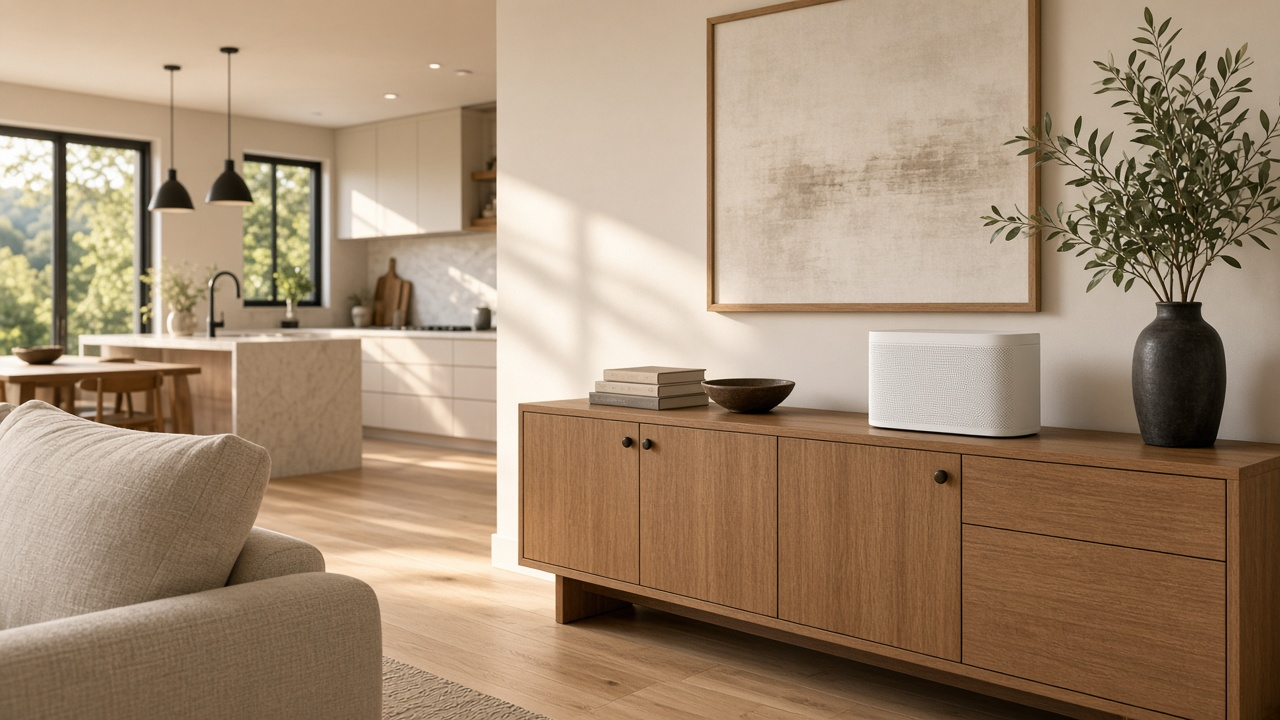
The kitchen and the living room share the morning. A bedroom joins in the evening, or stays quiet while the rest of the house keeps the song. Dinner moves outside and the music comes with it. Later the living room becomes a movie, without a separate stack of gear. Whole-home Sonos in Marin is that ordinary day: the rooms you actually live in, on one system anyone in the house can find.
A speaker in every corner is a shopping list. Whole-home is a smaller choice — which rooms share a mood, and which stay out of it. Grouped playback, on the services the household already uses, only feels simple when those rooms were chosen on purpose and the path between them can hold.
Why a shopping list falls short
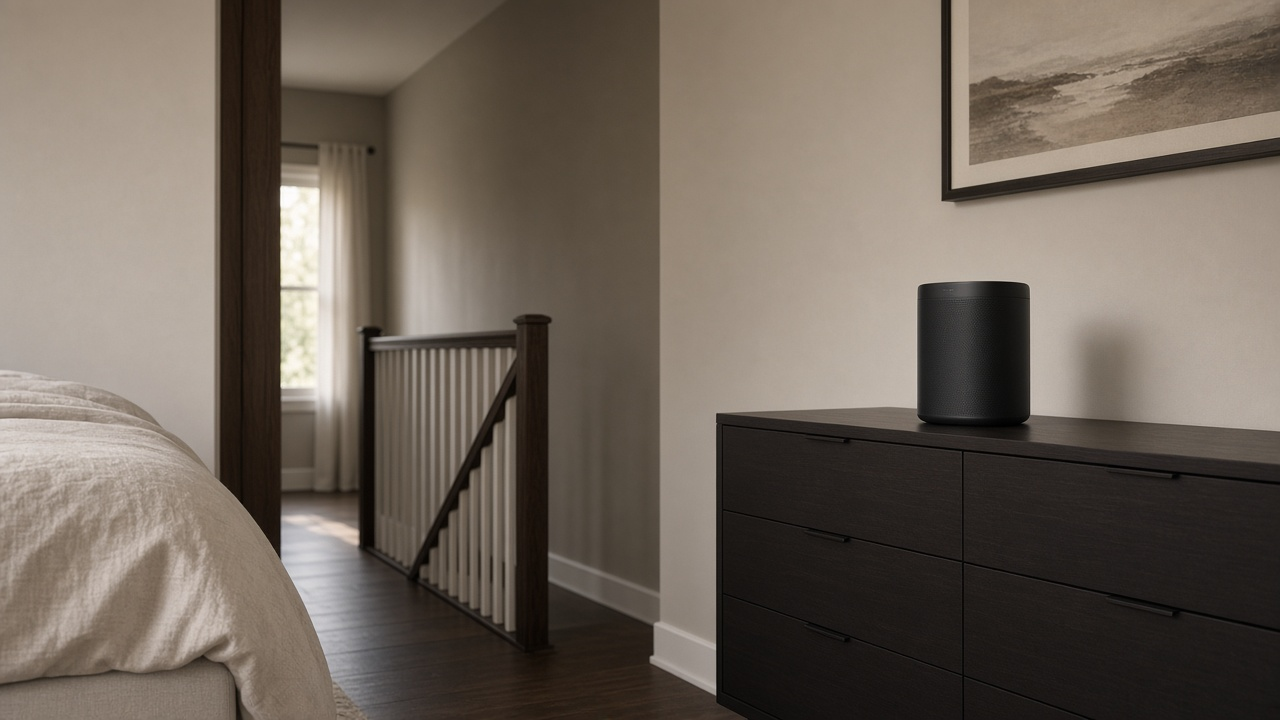
Everyday living is a few rooms with a job. The kitchen and the living room often share the day. A suite joins when you want it and drops out without stopping the rest. Outdoor entertaining stays part of the same house: the seating groups for the evening and goes quiet when everyone comes inside. It is not a second system for the yard. Television stays obvious — one place to watch, a level a neighbor can live with — and the playlist does not have to follow you into the film.
A house and a condo are the same idea at a different size. Open walls are the moment to hide speakers and run a clean path, so a finished ceiling can still join the kitchen. A finished condo usually wants fewer freestanding rooms, careful cable, and volume that respects a shared wall. Neither needs a name in the app for a corner nobody sits in.
When a group drops, the speakers are usually fine. Calls, cameras, and distance are the usual reason. See Wi‑Fi ready for Sonos that stays grouped.
What HomeIQ does
We map the zones to how you move. Everyday rooms first. Outdoor seating as part of the evening, not a party stack. TV audio that stays simple on a Friday. While the walls are open, we choose what stays wireless and what becomes in-ceiling or in-wall, driven from a dry indoor Amp so that room still shows up in the same app. A finished home can still be done. The route just has to respect what is already closed.
You leave with room names, a note on what rides the air and what is on a wire, and a system the household can start without a tutorial. Sonos can stand on its own for years. When lighting and shades later earn a Crestron layer, the speakers stay. Music joins welcome, dinner, and away without a rip-out.
Book a free consult or call (707) 329-0550 · sales@homeiq.solutions. Tell us which rooms matter, whether the walls are still open, and whether outdoor seating is in the plan. Photos of those rooms are enough to start. HomeIQ serves Marin, Sonoma, Napa, and San Francisco.
How it works
Map the day
Which rooms share a mood, which stay quiet, and whether outdoor seating and the TV belong.
Choose wire or air
Wireless where the house is finished. A wired room when the walls are open.
Walk through it
Labels, one system, and a note on what can grow later.
Frequently Asked Questions
No. Whole-home is the rooms you use. A corner you do not live in becomes an unused name in the app.
Yes, at a smaller size. Fewer zones, careful cable, and volume a neighbor can live with. A house with open walls can hide more of the path. The question is still which rooms have a job.
Usually no. That is the network, and it has its own page. Another wireless speaker on a weak path makes the group harder to hold.
No. We plan Sonos so it can stand alone now and join Crestron scenes later without ripping the speakers out.
Yes. We design, install and support Sonos systems, with the network planned alongside the speakers.